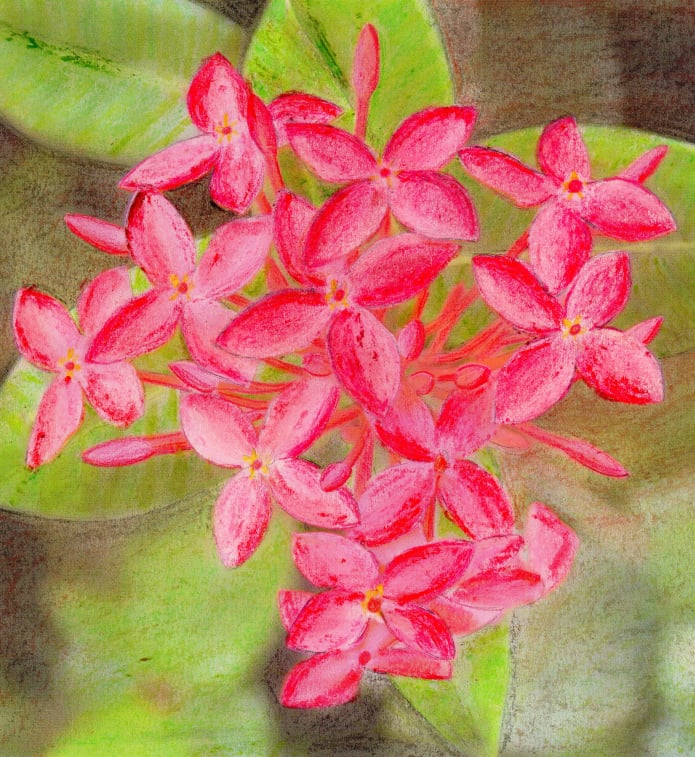
The Divine Play by Rūpa Gosvāmī
Excerpt from the Introduction
Hari-līlā-śikhariṇī
In writing this book, I have sought to make Śrīla Rūpa Gosvāmī’s drama, the Vidagdha-mādhava, accessible to the widest possible audience. The description of the divine couple’s pastimes is literature of the highest order, an articulation of ultimate reality. In fact, it is not literature, not a play, but a living divine act. It is a stream of nectar that can ease the miseries of material existence, elevate one from the repetitive cycle of birth and death, and bless one with the sweetest elements of divine love.
May the divine play of Śrī Rūpa come alive in our hearts!
Why is this work so difficult to approach?
The Supreme Lord’s inconceivable pastimes are so distant that they are almost unattainable for people bound by the shackles of karma. At the same time, these narratives are descriptions of the Lord’s eternal abode, where we naturally belong and for which we naturally yearn in the depths of our hearts. Indeed, it is exactly these descriptions that are medicine for the sickness of the soul, the way back to our eternal home. Thus, approaching these pastimes seems unattainable, but through the grace of guru and Kṛṣṇa, anything is possible. The subject matter of this book is far away in terms of our qualifications, but it is as near as our own hearts, for it is where we originally come from.
Reading about the divine pastimes and passionate feelings of Śrī Kṛṣṇa and Rādhikā as conveyed in the pages of Vidagdha-mādhava, the uninitiated may believe that they are engaging with a text about worldly lovers. Even devotees of Kṛṣṇa who practice self-restraint are sometimes afraid to read works such as this, thinking it too advanced or beyond their realisation. In reality, however, Rādhā is not an ordinary woman, but is actually Kṛṣṇa’s energy, his love personified. Indeed, Rādhā and Kṛṣṇa are one and the same reality, but they have taken two forms to enjoy each other by experiencing different flavours of love. Their passion is a sacred fire that purifies and burns away the last germs of worldly desires.
The work before us, the Vidagdha-mādhava, is written in Sanskrit and Prakrit, is full of difficult-to-translate puns and ambiguous statements, and bears the formal requirements of a play that follows the intricate and complex rules of Vedic dramatic writing. When reading English translations, we often get stuck: the plot, rich in unexpected turns and poetic ornamentation, is difficult to follow; we lose the thread of the narrative while pondering the deep meaning or admiring the beauty of individual verses. The lack of clear wording makes the reading obscure. It is difficult to understand where the plot starts and where it is going, what it really wants to say, and what its essential purpose is. We might read it out of curiosity, but it is likely far from our favourite book. We may even put it aside after a few pages because it is “not enjoyable” in the usual sense.
We put aside the most precious treasure in the world, unaware that it sits right in our hands.
The Divine Play by Rūpa Gosvāmī is an attempt to make the work accessible with an insight chiefly relying on Śrī Caitanya-caritāmṛta’s narrations, and giving the reader a summary version of the play in English.
The first chapter of Caitanya-caritāmṛta’s Antya-līlā tells the story of how Vidagdha-mādhava was born. It begins with Rūpa Gosvāmī’s first visit to Vṛndāvana, where he took some notes. Later he stayed in Jagannātha Purī, where he continued to write, and, at the request of Caitanya Mahāprabhu, presented his work to an assembly that included the Lord himself, Rāmānanda Rāya, Svarūpa Dāmodara, and other intimate associates of Śrī Caitanya. In this presentation he recited some of the verses that had by then been composed, twenty-nine in number. The description of Śrī Caitanya-caritāmṛta thus provides us with two important clues: a review of the circumstances of the Vidagdha-mādhava’s composition, and the specific verses recited by Śrī Rūpa before his illustrious audience. The latter is particularly significant for three reasons. These verses were composed by Śrī Rūpa first, or at least they were selected by him for presentation to his august assembly; they were heard and relished by Śrī Caitanya and his companions who then blessed Rūpa Gosvāmī for his further literary mission; and they were recorded by Kavirāja Gosvāmī in Śrī Caitanya-caritāmṛta, highlighting them for posterity. They indeed became priceless gems for the Gauḍīya Vaiṣṇava community. Furthermore, with his English translation, Śrīla Prabhupāda has placed these treasures in the hands of interested parties, East and West.
After offering some biographical data, the first part of The Divine Play by Rūpa Gosvāmī summarises the circumstances under which the Vidagdha-mādhava was composed and sheds light on the twenty-nine verses presented by Śrī Rūpa to Śrī Caitanya and his associates. While discussing the verses, it will provide insights into the plot of the play, the basic concepts of Sanskrit poetics and dramaturgy, the science of rasa, and other works of Rūpa Gosvāmī including their related philosophy. When we hear about the personal life of a famous man, known from afar and seemingly inaccessible, we immediately feel closer to him. It is this that we hope to achieve with the first part of this book.
The second part offers a summary of Vidagdha-mādhava for an English-speaking audience. Naturally, with such a summary, much is lost in terms of the original work, but we can gain quite a bit as well. If Śrī Rūpa’s work becomes accessible by tasting a drop or two of the nectar flow of Rādhā and Kṛṣṇa’s pastimes as presented here, or somehow points to the nectar ocean of the complete original work, leading the reader to investigate the text more thoroughly, this book will have fulfilled its essential mission.
May the words of this book illuminate the path that leads to the nectar of Rādhā and Kṛṣṇa’s pastimes!
